


Caviar and Champagne: The Perfect Pairing Guide
Why the pairing works, which styles to choose, and how to match Champagne to each caviar variety
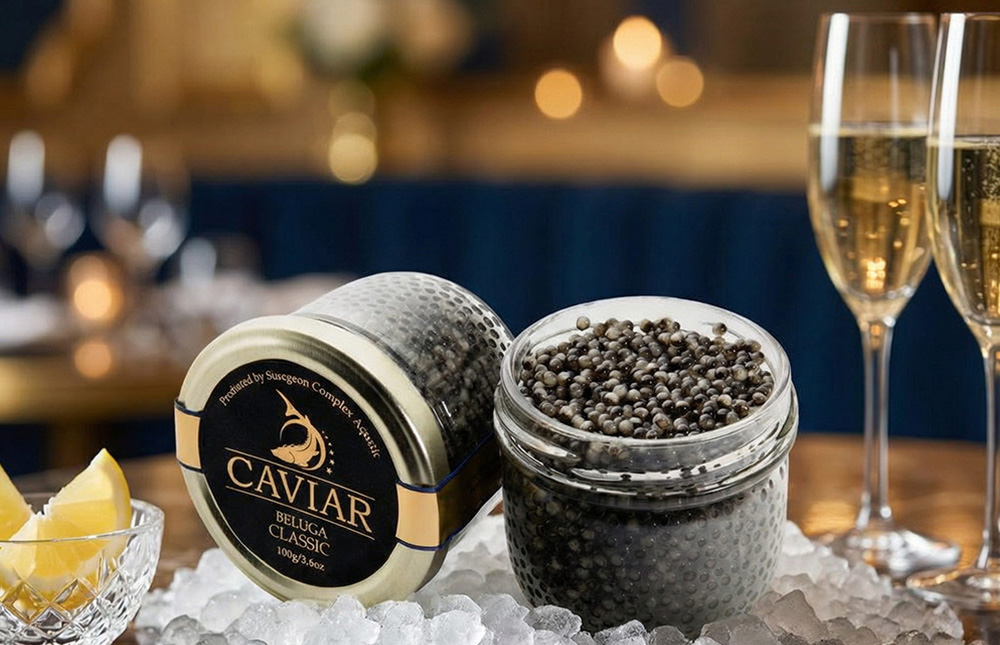
Of all the pairings associated with luxury food, few are as instantly recognisable — or as reliably excellent — as caviar and Champagne. It is a combination that has defined celebration for over a century, from imperial Russian court dinners to modern-day New Year’s Eve tables. But not every Champagne suits every caviar, and getting the pairing right makes a genuine difference to how both are experienced.
This guide explains why the pairing works so well, how to choose the right style of Champagne, and how to match it to the specific caviar variety you are serving.
Why It Works
Why Caviar and Champagne Work So Well Together
The pairing succeeds for reasons of genuine chemistry, not just tradition. Champagne’s high acidity and fine, persistent bubbles cut cleanly through the richness and natural oils of caviar, refreshing the palate between each spoonful rather than allowing the flavour to become heavy or repetitive. The bubbles themselves also play a textural role — their gentle effervescence provides a pleasant contrast to the soft pop of a caviar egg, keeping the overall experience lively rather than one-note.
At the same time, good Champagne brings its own savoury, slightly yeasty complexity — a product of the traditional method and extended lees ageing — which complements rather than competes with the briny, umami character of caviar. The result is a pairing where both elements genuinely elevate each other, rather than one simply tolerating the other.
Not Just Any Sparkling Wine
Why Champagne Specifically, and Not Just Any Sparkling Wine
It is worth understanding briefly why Champagne, rather than Prosecco, Cava or English sparkling wine, is the standard pairing — the answer lies in production method. Champagne undergoes secondary fermentation inside the bottle, followed by an extended period resting on its lees (spent yeast cells), which is what produces its characteristically fine, persistent bubbles and its distinctive savoury, biscuity complexity. This same production method is used for high-quality English sparkling wine and some other traditional-method sparkling wines, which can make very credible alternatives at a lower price point. Prosecco, by contrast, is typically made using a tank method that preserves fresh, fruity aromatics but produces coarser bubbles and considerably less structural complexity — pleasant on its own, but generally a less refined match for premium caviar.
None of this is to say Champagne is the only acceptable choice. A well-made traditional-method English sparkling wine, in particular, can rival Champagne for this pairing at a more accessible price — the key characteristic to look for, whatever the label says, is that fine, persistent bubble structure and savoury complexity rather than simple fruitiness.
Styles
Choosing the Right Style of Champagne
Blanc de Blancs — made entirely from Chardonnay grapes — is widely regarded as the finest match for premium black caviar. Its precision, high acidity and mineral character make it an outstanding partner, particularly for more delicate varieties.
Non-vintage Brut is a reliable and versatile choice. A well-made non-vintage Champagne from a serious house is often a better caviar pairing than an expensive vintage or prestige cuvée, whose greater richness and complexity can occasionally compete with the caviar rather than support it.
Extra Brut or Brut Nature (very low or zero dosage) styles, with little to no added sugar, are an excellent choice for those who prefer the driest possible expression — the complete absence of sweetness lets the caviar’s own flavour lead entirely.
Rosé Champagne is best approached with some caution. Its fruit-forward character can work beautifully with red caviar but tends to compete with the more delicate notes of Beluga or Sterlet — reserve rosé for bolder pairings rather than your finest black caviar.
Match by Variety
Pairing Champagne to Your Caviar Variety
Different caviar varieties suit slightly different Champagne styles, and matching intensity to intensity is the guiding principle.
Beluga — the most delicate of the four varieties — pairs best with an equally refined Champagne. A fine Blanc de Blancs is the classic choice: precise, mineral and never loud enough to overshadow Beluga’s subtle, creamy finish.
Osetra — with its nuttier, more assertive character — can comfortably stand up to a fuller-bodied non-vintage Brut, including blends with a higher proportion of Pinot Noir, which bring a little more weight and structure to match Osetra’s own intensity.
Sterlet — historically the caviar of the Russian imperial court — deserves an equally elegant partner. A refined Blanc de Blancs or a delicate non-vintage Brut allows its subtle, aristocratic flavour room to be appreciated properly.
Bester — a Beluga-Sterlet hybrid with a genuinely balanced flavour profile — pairs well across most of the styles above, making it a forgiving and versatile choice if you are serving a single Champagne alongside several caviar varieties at the same table. For more detail on how Bester compares to the other three, see our full guide to Beluga vs Osetra vs Sterlet vs Bester.
Temperature
Serving Temperature for Both
Temperature discipline matters as much for Champagne as it does for caviar. Champagne should be served properly chilled, between 7°C and 9°C — any warmer and the wine loses its precision and the bubbles turn coarse. Caviar should be held between 0°C and 4°C right up until the moment of serving, ideally with the tin nestled in a bowl of crushed ice throughout the meal. Serve both at the correct temperature and the pairing will taste as intended; let either drift too warm and the whole experience softens. For complete guidance on caviar temperature, tools and presentation, see our full guide to serving caviar.
What to Avoid
What to Avoid
A handful of common mistakes are worth flagging specifically in the context of Champagne. Heavily oaked, buttery sparkling wines clash with caviar’s brininess rather than complementing it — this is one of the reasons Champagne, rather than other sparkling wines, remains the standard. Sweet styles, including demi-sec and doux, overwhelm caviar’s savoury character entirely and should be avoided. And as with caviar service generally, never serve or eat caviar with metal cutlery — even at the most elegant Champagne pairing, a stray metal spoon will undo the entire effort with an unwanted metallic taste.
The Complete Evening
Building a Complete Caviar and Champagne Evening
Beyond the pairing itself, a little attention to presentation elevates the whole occasion. Serve caviar with a proper mother-of-pearl spoon and mother-of-pearl plate rather than whatever cutlery happens to be to hand — both are inexpensive relative to the caviar itself and make a genuine difference to the experience. Champagne flutes or, increasingly favoured by sommeliers, a slightly wider tulip-shaped glass will show the wine at its best.
If you are hosting and want the full experience taken care of, browse our caviar gift sets — several are built around a single generous variety and make an elegant centrepiece for exactly this kind of evening, ready to pair with the Champagne of your choice.
Hosting Tips
A Few Practical Tips for Hosting
Open and pour the Champagne first, allowing guests a few minutes to settle before the caviar arrives — this lets the wine show itself properly before the pairing begins. Plan for roughly 20 to 30 grams of caviar per person if it is served as a proper course rather than a canapé, and pour Champagne generously but not to the very top of the glass, which helps preserve the bubbles for longer. Above all, resist the temptation to overcomplicate the table: caviar and Champagne, served simply and at the correct temperature, need very little else to shine.
Common Questions
Common Questions About Pairing Caviar and Champagne
How much Champagne should I serve per person? A standard 750ml bottle pours roughly six glasses, which comfortably serves three to four guests across a caviar course when paired with a light starter or canapé format. For a dedicated caviar-and-Champagne tasting as the centrepiece of an evening, plan for closer to two glasses per person.
Can I use the same Champagne for the whole meal, or should it change with each caviar variety? A single well-chosen Blanc de Blancs or non-vintage Brut will pair respectably with all four varieties, so there is no need to open multiple bottles unless you particularly want to. If you are hosting a more elaborate tasting and want to explore the pairing properly, moving from a lighter Blanc de Blancs with Sterlet or Beluga through to a fuller-bodied Brut with Osetra is a rewarding progression.
Is vintage Champagne worth it for this pairing? Not necessarily. A characterful, well-made non-vintage Champagne from a serious house very often outperforms an expensive vintage bottle in this specific context, since vintage Champagne’s added complexity can compete with the caviar rather than support it. Save the vintage bottle for an occasion where the Champagne itself is the star.
Plan Your Pairing
Ready to Plan Your Pairing?
Explore our full caviar range to choose the variety best suited to your evening — including our Classic and Premium ranges — and pair it with a Champagne style to match. For advice on choosing caviar for a specific event, or for corporate and private gatherings, please contact us — we are always happy to help.
Caviar & Champagne – An Unforgettable Evening
Choose from our Classic and Premium ranges, and pair with the Champagne style that suits your celebration.