


How to Serve Caviar: A Complete Guide to Presentation, Pairing and Etiquette
Master the art of serving caviar – temperature, tools, accompaniments, and the drinks that elevate the experience
There is an art to serving caviar well — and getting it right makes an extraordinary difference. The same tin of premium black caviar, served correctly, delivers a lingering, multi-layered experience that stays in the memory for years. Served incorrectly, even the finest Beluga can taste flat, metallic or simply underwhelming. The good news is that the rules are few, simple and logical once you understand the reasons behind them.
This guide covers everything you need to serve premium caviar at its best — temperature, tools, accompaniments, quantities, drinks pairings and the common mistakes that even experienced buyers sometimes make.
The Golden Rule
The Golden Rule: Never Use Metal
If there is one thing to take away from this guide, it is this: never serve or eat caviar with a metal spoon. No silver, no stainless steel, no gold-plated cutlery. The reason is chemistry: the delicate oils in caviar eggs react immediately with metal, producing an unpleasant metallic taste that overwhelms the subtle, complex flavour of the caviar itself. A single touch of the wrong spoon can ruin an otherwise perfect experience.
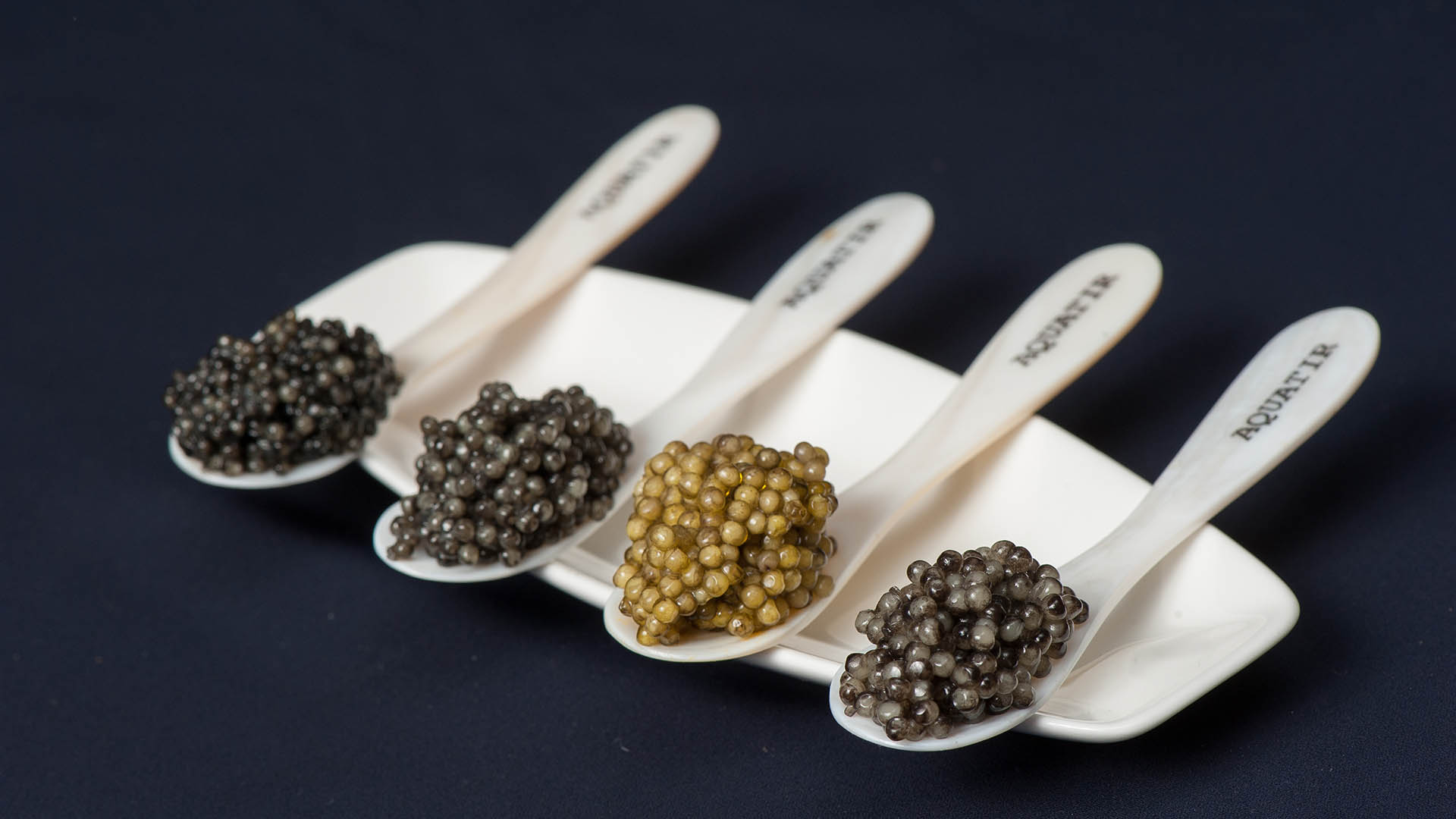
The correct tools for serving caviar are made from mother-of-pearl, bone, horn, ivory (antique only), or food-grade plastic. Of these, mother-of-pearl is the gold standard — it is inert, beautiful and the traditional choice in every serious caviar house and Michelin-starred restaurant that serves caviar correctly.
A dedicated mother-of-pearl caviar spoon is the single most important investment you can make in your caviar service. Equally, a mother-of-pearl serving plate ensures that even the surface your caviar rests on does not compromise the flavour. Browse our full caviar accessories range for everything you need to serve correctly.
Mother‑of‑Pearl – The Gold Standard
A mother‑of‑pearl spoon and plate are the only surfaces that guarantee no flavour interference. They are also beautiful, traditional, and will last a lifetime. Invest in the right tools and you invest in the experience.
Temperature
Temperature: Cold, But Not Frozen
Caviar should be served cold — but there is an important distinction between cold and frozen. The ideal serving temperature for premium black caviar is between 0°C and 4°C, which is the temperature of a well-set domestic refrigerator. Caviar served at room temperature loses the firmness of its eggs and much of the clarity of its flavour. Caviar that has been frozen loses its texture entirely — the egg membranes rupture, and what arrives on the spoon is a mushy shadow of what it should be.
The traditional and most elegant way to maintain serving temperature is to set the caviar tin inside a bowl of crushed ice. This keeps the temperature constant throughout the meal, prevents the tin from warming in the hands of guests, and creates a presentation that is unmistakably sophisticated.
Remove the tin from the refrigerator no more than ten minutes before serving. If the tin has a vacuum-sealed lid, it will make a satisfying sound when opened — this is a sign of freshness and correct storage.
Opening
How to Open a Caviar Tin
Caviar tins — particularly smaller 28g and 50g formats — have a specific technique. A dedicated caviar can opener gives you the cleanest, most controlled result. Insert the opener under the rim and work around the edge gently, releasing the seal gradually rather than prying the lid off in one motion, which can disturb the eggs or send the lid into the caviar itself.
Once open, do not stir or mix the caviar. The eggs sit naturally in their brining liquid; disturbing them unnecessarily can break the membrane. Simply use your mother-of-pearl spoon to take from the surface and serve directly.
Accompaniments
Classic Accompaniments: What to Serve with Caviar
The debate about what to serve alongside caviar has been running for centuries, and strong opinions abound. The consensus among connoisseurs, however, has settled on a clear principle: accompaniments should enhance the caviar, not compete with it. Anything strongly flavoured, heavily seasoned or acidic enough to dominate the palate will obscure rather than complement.
Blinis
The classic choice, and still the best for most occasions. Unsalted buckwheat blinis — small, slightly warm — provide a neutral, slightly earthy base that complements black caviar beautifully. Use salted blinis only if that is all available; the salt is workable, but it does compete slightly. The size matters too: blinis should be small enough that each one carries only one or two eggs’ worth of caviar — this is a tasting, not a sandwich.
Crème fraîche
A small amount of unsweetened crème fraîche applied lightly to the blini before the caviar creates a creamy, cool base that prolongs the finish. Use it sparingly — the caviar should be the lead, and the crème fraîche the supporting note.
Hard-boiled egg
Finely chopped hard-boiled egg — both yolk and white, separated — is a classic accompaniment that softens the intensity of the caviar and works particularly well when serving larger quantities. It is especially appropriate for red caviar service.
Finely chopped shallot
Used in tiny amounts, shallot provides a gentle sharpness that some tasters feel enhances the brine of black caviar. It is optional and a matter of personal preference — many purists omit it entirely for the finest Beluga.
Toast points
When blinis are unavailable, lightly toasted, thinly sliced white bread — crusts removed, cut into small triangles — is an acceptable substitute. Avoid heavily flavoured breads such as sourdough or rye, which will overpower the caviar.
What to avoid
Lemon juice is perhaps the most common mistake at first-time caviar service. A squeeze of lemon seems instinctive — it accompanies so much seafood — but it overwhelms black caviar immediately, masking the subtle oils and the characteristic finish. Strongly flavoured crackers, chips, smoked fish and any garnish with a dominant flavour should also be set aside.
Quantities
How Much Caviar to Serve Per Person
Quantity is one of the most frequently asked questions, and the answer depends entirely on the role caviar is playing in the meal.
5–10g per person — appropriate for a canapé pass, an amuse-bouche, or a single spoonful to introduce the ingredient to guests unfamiliar with it. Our 28g tin is ideal for two to three people in this format.
20–30g per person — the standard quantity for a caviar starter course, served with blinis and accompaniments. This is the most common format for a dinner party of four to six, and represents a generous, satisfying portion. Our 100g tin serves three to four people at this quantity.
50g per person — when caviar is the centrepiece of the meal — a dedicated caviar course, unaccompanied by any other dish — 50g per person allows each guest to taste properly, pause, and return. This is the format used at the highest level of caviar service.
If you are planning to serve multiple varieties of black caviar side by side — as a tasting — reduce the quantity of each variety proportionally.
Drinks Pairing
Drinks Pairing: What to Drink with Caviar
The drinks pairing for caviar is one area where tradition and modern gastronomy have arrived at the same conclusion: a small number of drinks genuinely enhance the experience; most others detract from it.
Vodka
Ice-cold, unflavoured vodka — ideally a high-quality Russian or Polish variety — is the traditional pairing of the Russian and Eastern European caviar tradition. Served neat in a small, chilled glass, vodka cuts cleanly through the richness of the caviar and resets the palate between spoonfuls. The pairing is so well-established that it arguably defines the cultural context in which caviar first became a luxury food.
Champagne
Non-vintage Champagne — preferably Blanc de Blancs, made entirely from Chardonnay grapes — is the Western European pairing of choice. Its fine bubbles, high acidity and yeasty complexity complement the brine and creaminess of black caviar without overwhelming it. Avoid rosé Champagne for the finest black caviar — the fruit notes can compete. Prestige cuvées are not necessary; a well-made non-vintage Blanc de Blancs is often a better pairing than a vintage Krug.
Dry white Burgundy
A fine Chablis or Meursault — unoaked or lightly oaked — is a sophisticated alternative for those who prefer still wine. The mineral, saline character of Chablis in particular is a natural complement to black caviar.
What to avoid
Red wine is almost universally a poor match for black caviar — the tannins clash with the briny, oily notes of the eggs. Sweet wines similarly overwhelm the subtle savouriness of the experience. Beer, while enjoyable in many contexts, is not a serious pairing for premium caviar.
Red Caviar
Serving Red Caviar: Some Differences Apply
Red caviar — from Keta, Nerka or Gorbuscha salmon — is more robust in flavour and considerably more versatile in its serving options. The same principle about metal spoons applies, but red caviar is more forgiving of accompaniments. It pairs beautifully with:
- Blinis with crème fraîche and fresh dill
- Lightly buttered toast points
- Scrambled eggs (an outstanding and simple breakfast or brunch dish)
- Sushi rice and seaweed (as Ikura, the Japanese preparation)
- Cold pasta with butter, finely chopped shallot and red caviar as a finishing element
Red caviar also tolerates a small squeeze of lemon rather better than black caviar, and pairs well with dry white wine, Prosecco and cold beer in less formal settings.
Complete Service
Building Your Complete Caviar Service
If you intend to serve caviar regularly — or to create a complete and impressive presentation for a special occasion — the right equipment makes a significant difference both practically and aesthetically.
The essentials: a mother-of-pearl serving spoon, a mother-of-pearl serving plate, and a dedicated can opener. A bowl for crushed ice and a small ladle for the ice complete the presentation.
These items together form a complete caviar service that is both functional and visually striking. Our caviar accessories range contains everything you need, and several of our gift sets include caviar alongside serving accessories — ideal for giving both the experience and the means to enjoy it properly.
Ready to Serve
Ready to Put This Into Practice?
The best way to develop your caviar service is simply to serve caviar — and to start with a variety of options so you can discover your preferences. Browse our full range of Classic black caviar, Premium black caviar and red caviar.
If you have questions about quantities, serving suggestions or choosing the right caviar for a specific occasion, please contact us — we are always happy to advise.
Premium Caviar & Accessories – Delivered to Your Door
Choose from Classic, Premium and red caviar, paired with mother‑of‑pearl tools for the perfect service.