


What Is Osetra Caviar? A Complete Guide to Russian Sturgeon Caviar
Flavour, origins, history and how to choose – everything you need to know about the connoisseur’s everyday caviar
Ask any serious caviar buyer which variety sits in their fridge most often, and the answer is very frequently not Beluga — it is Osetra. While Beluga carries the greater prestige and the greater price tag, Osetra has quietly earned a reputation among connoisseurs as the caviar that offers the most complete experience: genuine complexity, distinctive character, and a price that supports buying it regularly rather than saving it for a single occasion a year.
This guide explains exactly what Osetra caviar is, where it comes from, what it tastes like, and how to choose between the different options available at London Caviar House.
What It Is
What Is Osetra Caviar, Exactly?
Osetra caviar comes from the Russian Sturgeon (Acipenser gueldenstaedtii) — one of the most widely farmed sturgeon species used for premium caviar production. The name itself is simply the Russian word for sturgeon (осётр), which is why “Osetra” and “Russian Sturgeon caviar” are used interchangeably, both in everyday conversation and on our own product pages.
The Russian Sturgeon is smaller than the giant Beluga and matures considerably faster, though still over a meaningful number of years rather than seasons — a reminder that even the “accessible” end of premium caviar represents a genuine, patient farming commitment. It is one of the most historically significant caviar species, having formed the backbone of the Caspian caviar trade for centuries alongside Beluga and Sterlet.
Taste Profile
What Does Osetra Caviar Taste Like?
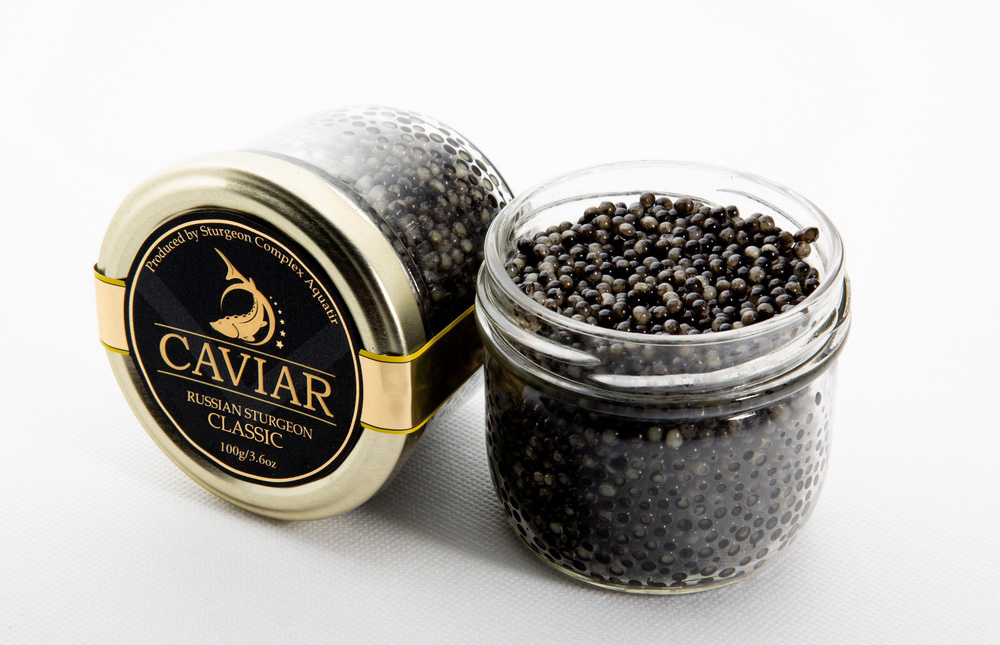
Osetra eggs are medium-sized and notably firm, with a colour that ranges from golden-grey through to a deeper brown — sometimes described as having an almost bronze sheen when held to the light. This is one of the easiest visual ways to distinguish Osetra from the paler grey of Beluga or the darker, smaller pearls of Sterlet.
In flavour, Osetra is the most complex and assertive of our four varieties. Where Beluga is prized for delicacy and a long, gentle finish, Osetra delivers immediate character: a distinctive nuttiness, a pronounced briny quality, and notes that many tasters compare to walnut skin or the clean minerality of the sea. It is a caviar that announces itself rather than whispering — which is precisely why it holds up so well alongside bolder food and wine pairings that would overwhelm a more delicate variety.
Osetra vs Beluga
Osetra vs Beluga: What’s the Difference?
The two varieties are frequently compared, and the differences are worth understanding clearly. Beluga comes from a considerably larger, slower-maturing fish, produces the largest eggs of any commercial caviar, and is prized above all for subtlety and a creamy, lingering finish. Osetra comes from a smaller, faster-maturing fish, produces medium eggs with noticeably more assertive flavour, and typically costs 40 to 60 percent of equivalent Beluga.
Neither is objectively “better” — the choice comes down to personal preference and occasion. For a full breakdown of how Osetra compares to Beluga, Sterlet and Bester side by side, see our complete guide to Beluga vs Osetra vs Sterlet vs Bester. For specific Beluga pricing, our Beluga price guide covers current figures in detail.
Classic or Premium
Classic or Premium Osetra: Which Should You Choose?
As with all four varieties we sell, Osetra is available in two ranges that differ only in harvesting method. Classic Osetra is produced using the humane no-kill milking method, in which the sturgeon survives the extraction process and can produce again in future seasons. Premium Osetra is produced using the traditional method.
Both are sourced from the same farm, the same fish stock and the same standards of care — the flavour and quality are, in blind tastings, indistinguishable. If the ethics and sustainability of the milking method matter to you, or if you are simply looking for excellent value, Classic Osetra is very often the better choice. You can read the full explanation of how the method works, and why it does not compromise on quality, in our guide to Classic caviar and the no-kill milking method.
To see Osetra alongside our other varieties, you can also browse the full Classic caviar range or the full Premium caviar range directly.
Our Producer
How Aquatir Produces Our Osetra
Every tin of Osetra caviar sold by London Caviar House is produced by Aquatir, our partner sturgeon farm and the exclusive producer behind our entire caviar range. Aquatir raises Russian Sturgeon in carefully controlled aquatic environments that replicate the water quality, temperature and current the species evolved to thrive in, with full CITES certification covering every fish and every harvest.
Because we are the official UK distributor of Aquatir, there are no intermediaries between the farm and your door — which is a significant part of why our Osetra is priced more accessibly than much of what is available elsewhere in the UK market, without any compromise on authenticity or traceability.
History
A Brief History of Osetra
Osetra’s story is inseparable from the history of the Caspian Sea caviar trade itself. Alongside Beluga and Sterlet, Russian Sturgeon formed the backbone of Russian and Persian caviar production for centuries, harvested from wild populations that once ran in extraordinary numbers through the rivers feeding the Caspian and Black Seas. As demand grew through the nineteenth and twentieth centuries and wild stocks came under increasing pressure, Osetra’s relative abundance compared to Beluga made it the variety most commonly encountered outside royal and aristocratic circles — the caviar of merchants and diplomats rather than exclusively tsars.
That historical accessibility has carried through to today, though the mechanism has changed entirely. Modern Osetra is exclusively farmed rather than wild-caught, produced under the same CITES framework and sustainable aquaculture standards that govern all legal caviar trade — but the same relative affordability compared to Beluga persists, which is exactly why it remains the variety most regular buyers reach for.
Sizes
Osetra Sizes and Which to Choose
Osetra is available across the full range of sizes carried at London Caviar House, from small tasting formats through to larger tins suited to entertaining or regular personal indulgence. As a rough guide: smaller tins work well for a canapé-style introduction or a gift for someone new to caviar, while larger formats offer significantly better value per gram and suit anyone planning to serve it as a proper starter course for a table of guests, or simply to enjoy it more than once. Because Osetra’s flavour holds up well over a few days once opened when stored correctly, a larger tin is a genuinely practical choice for households that enjoy caviar regularly rather than only on special occasions.
Nutrition
A Note on Nutrition
Beyond its flavour, Osetra — like all sturgeon caviar — is a genuinely nutrient-dense food. It is a natural source of complete protein, omega-3 fatty acids, vitamin B12, iron and selenium, and it is typically consumed in small quantities, which makes it easy to enjoy as an occasional indulgence without excess. This is a pleasant secondary benefit rather than the reason to choose caviar, but it is worth knowing that, unlike many luxury foods, Osetra earns its place at the table on nutritional merit as well as flavour.
Serving
How to Serve Osetra Caviar
Osetra’s firmer eggs and more pronounced flavour make it especially versatile at the table. Serve it chilled — ideally with the tin nestled in a bowl of crushed ice — and always with a mother-of-pearl or bone spoon rather than metal, which reacts with the delicate oils in the eggs and introduces an unwanted metallic taste. Osetra will happily stand up to accompaniments that a more delicate Beluga might find overwhelming: a little unsalted crème fraîche, finely chopped shallot, or a classic warm blini all work beautifully alongside it. Its assertive character also makes it an excellent choice for guests who are trying black caviar for the first time and want an experience with genuine, memorable character rather than something so subtle it risks going unnoticed.
For complete guidance on temperature, tools, accompaniments and drinks pairings across all our caviar varieties, see our full guide to serving caviar.
Start Small
Try Osetra Without Committing to a Large Tin
If you have not tried Osetra before and would rather start small, our Osetra 2+1 bundle of 28g tins is an excellent way in — three tins at a friendlier price point than buying individually, ideal for sharing with friends, gifting, or simply confirming that Osetra is the variety for you before investing in a larger 500g or 1kg tin.
Why Buy From Us
Why Buy Osetra From London Caviar House
Osetra caviar is only ever as good as its source, and sourcing is where we place the most emphasis. Every tin we sell is CITES-certified, fully traceable to Aquatir, and imported directly with no wholesale markups along the way. That directness is what allows us to offer genuinely premium, farm-certified Osetra at prices well below typical UK retail — not because anything has been compromised, but because nothing unnecessary has been added to the price. You can read more about how our direct sourcing affects pricing across the range.
Ready to Try
Ready to Try Osetra?
Browse our full caviar range, or go straight to Classic Osetra and Premium Osetra to compare the two ranges directly. For any questions about choosing the right caviar for your occasion, please contact us — we are always happy to help.
The Connoisseur’s Caviar – Taste the Difference
Explore our Classic and Premium Osetra ranges – CITES‑certified, direct from Aquatir, delivered to your door.